
$1.5 Million Investment to Modernize Breast Health Care at NHH
An investment in breast health is an investment in earlier diagnosis, improved patient comfort, and better outcomes for patients and families facing breast cancer in our community. With your support, we will help modernize the breast health program at NHH by funding the following priorities.
With advanced breast imaging technology including 3D mammography and contrast-enhanced imaging, a new mammography unit will provide clearer, more detailed images to help detect breast cancer earlier, and improve diagnostic accuracy
Investing in a 4th ultrasound unit will expand overall imaging capacity while creating dedicated breast ultrasound capacity, reducing wait times and improving access for patients
A replacement scanner will strengthen breast health and survivorship care by enabling timely bone health monitoring before, during, and after treatment, supporting early intervention to prevent treatment-related bone loss
This technology, used to pinpoint non-palpable breast tumours prior to surgery, was introduced on a trial basis in 2025 with excellent results and will be permanently implemented in the coming year to improve patient comfort and support surgical precision
Community Lives Here
Your Support Helps Ensure it Stays Here
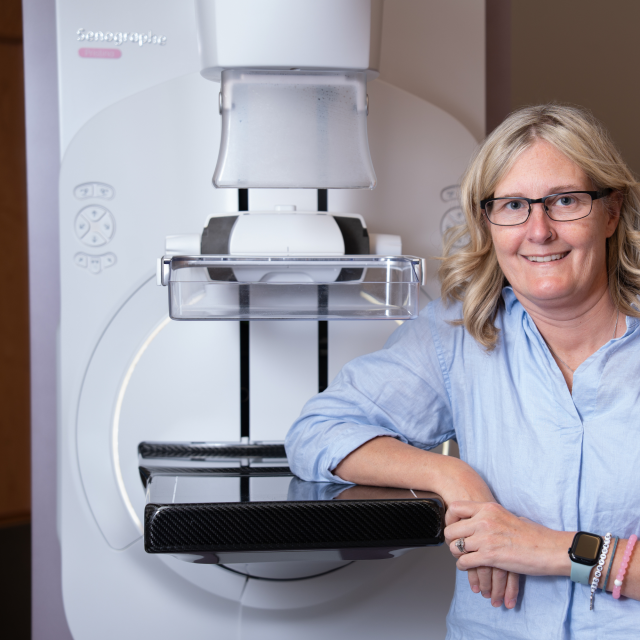
Harnessing 3D Technology — Because Every Detail Matters
Diagnostic imaging is critical in diagnosing, screening, and monitoring a majority of illnesses and injuries. The speed and efficiency of this department is instrumental in setting patients on the best course of care.
Mammography is one of the many diagnostic imaging services offered at Northumberland Hills Hospital (NHH) and involves x-raying the breast using low dose radiation for breast cancer screening and diagnosis. Early detection of breast cancer is crucial in improving survival rates, treatment success, and patient quality of life.
NHH operates as both an Ontario Breast Screening Program (OBSP) clinic, and an assessment and treatment site, providing imaging, biopsies, surgery, and systemic therapy all under one roof. In 2025, 8,389 breast studies were conducted by mammography alone — an increase of more than 7.18% from the year previous.
Demand for services and diagnostic procedures is steadily increasing as the population of west Northumberland continues to grow and age. We have an opportunity to advance breast imaging at NHH by purchasing a new mammography unit, which will support Digital Breast Tomosynthesis (DBT), commonly referred to as tomography. This technology creates 3D images of the breast, allowing radiologists to examine breast tissue layer by layer for improved visibility and more precise detection. It also allows for contrast-enhanced mammography, which provides greater detail for identifying and assessing abnormalities and supports more informed clinical decision-making.
Benefits of upgraded mammography technology include:
- Improved image quality and detail for more accurate diagnosis
- Earlier detection of breast cancer
- Fewer unnecessary call-backs for additional testing
- Reduced patient anxiety and uncertainty
- Enhanced ability to evaluate and characterize abnormalities
- More accurate staging and treatment planning
- Potential reduction in unnecessary biopsies
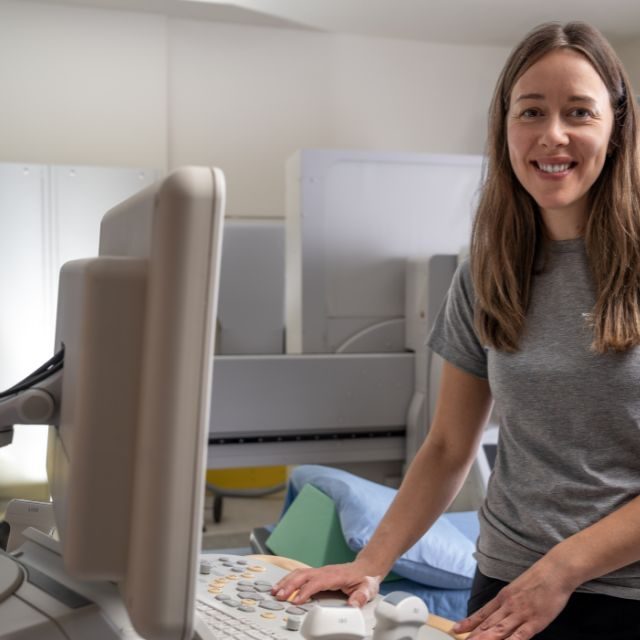
Timely, Accurate Diagnosis
Ultrasound is one of the many diagnostic imaging services offered at NHH. It is a safe, non-invasive imaging technology that uses high-frequency sound waves to create real-time images of soft tissue structures inside the body. Ultrasound is used to:
- Assess a range of conditions, including deep vein thrombosis (DVT), appendicitis, cholecystitis, and other abdominal concerns
- Evaluate blood flow and vascular health, including conditions affecting the carotid arteries
- Support breast imaging and diagnostic workups when screening for breast cancer
- Monitor fetal growth and development throughout pregnancy
- Examine the female pelvis, including the uterus and ovaries, to detect conditions such as ovarian cysts and fibroids
- Guide procedures, such as biopsies, enabling greater precision and improving patient safety
Utilized in such a broad range of care, ultrasound is a critical diagnostic imaging service that has seen an exponential increase in demand in recent years.
In 2025, 11,203 ultrasounds were performed – an increase of 6.81% from the year previous.
NHH currently operates three ultrasound rooms and the need for services and diagnostic procedures is steadily increasing as the population of west Northumberland continues to grow and age. The addition of a 4th ultrasound unit will enhance the ultrasound program by expanding overall imaging capacity and creating dedicated breast ultrasound capacity, reducing wait times and improving access for patients.
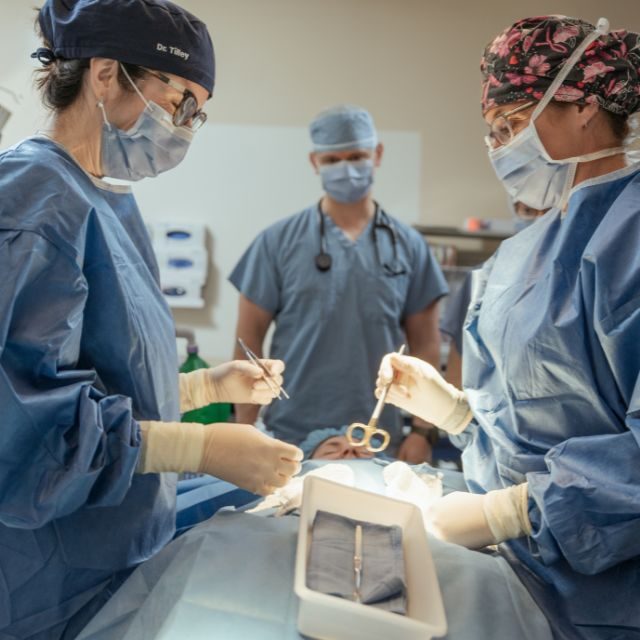
Supporting wire-free breast tissue localization for more precise, patient-centered care.
Some breast tumours can’t be felt by hand. They’re known as nonpalpable tumours – there are no lumps, no warning signs, and often no symptoms. These are generally early-stage cancers, when treatment can be most effective and without diagnostic imaging, they would remain hidden.
Detection is only the first step. The standard treatment for a nonpalpable breast tumour is to surgically remove it, but if surgeons can’t feel the tumour, they also can’t find it easily. This is where breast tissue localization comes in: a digital marker is implanted as a guide to pinpoint the location of the tumour before surgery.
The current localization technique used for patients of NHH is wire-guided — meaning a radiologist places a wire into the breast tissue before surgery, on the same day. This technique is technically challenging, involves patient discomfort, and restricts scheduling flexibility.
The newest wire-free, nonradioactive localization overcomes issues and limitations of the current process. Wire-free technology was successfully introduced at NHH on a trial basis in 2025 and with community support, we will adopt this permanently for future patients.
Benefits of wire-free breast tissue localization include:
- Improved patient comfort and reduction in anxiety
- Less invasive procedure (no protruding wire)
- More precise marking of abnormal areas for biopsy or removal
- Increase in operational efficiency and decrease in last-minute changes or delays in care
- Better resource utilization with more flexible scheduling process