
Light Up a Life
Your gift of any amount – combined with gifts from other friends in the community – will help us modernize breast health care at Northumberland Hills Hospital.
First introduced in 1994, the annual Light Up a Life campaign has raised more than $4.8 million and funded a variety of equipment for NHH over the years – everything from surgical scopes, to anaesthetic machines, hospital beds, and the MRI.
Funds raised this year will support key investments to be made in NHH’s breast health services.
Read a message from Dr. Sepideh Karkhanechi, our 2026 Light Up a Life Chair, and discover Julia’s story below.
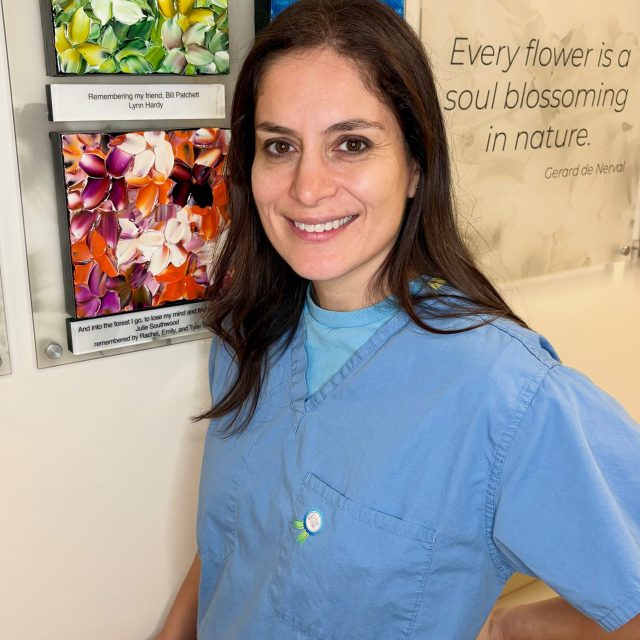
Chief, NHH Department of Diagnostic Imaging and Lead of Breast/Women’s Imaging
I joined the team at Northumberland Hills Hospital (NHH) seven years ago for two reasons. First was the atmosphere – created by a dedicated team of staff, physicians, and volunteers, there is a friendliness and supportive feeling here and many of the people I work with have become almost like family to me over the years. The second was access to advanced technology and equipment to provide high-quality, modern patient care.
The support our hospital and Diagnostic Imaging Department have received from our community has been truly incredible. As a radiologist, it is inspiring to see firsthand how the generosity of our donors has translated into meaningful investments in cutting edge imaging technology and equipment. These resources are a testament to the strength of our community’s commitment to our hospital and play an essential role in helping us deliver timely, accurate diagnoses and the best care possible for our patients.
In the years since I started here, technology has continued to advance. New technologies and approaches are helping us detect breast cancer earlier, improve detection in dense breast tissue, and make the patient experience more comfortable.
We are at a pivotal moment, with an opportunity to build on the progress seen in breast health care to modernize our program with four key investments:
- A new 3D Mammography Unit with contrast imaging capabilities
- A new Ultrasound to expand imaging capacity
- A replacement Bone Mineral Density (BMD) Scanner
- Wire-free Breast Tissue Localization technology
Together, we can bring the benefits of new technology to those who depend on our hospital, while supporting earlier detection and improved patient comfort.
Julia’s story below highlights the importance of screening and early detection. Whether identified through routine screening or diagnostic imaging following a breast change, early detection is crucial. Modern equipment and technology are essential to find breast cancer before it can be felt by hand, which often means tumours are smaller and less likely to have spread to regional lymph nodes or distant organs of the body.
Thank you in advance for your support – your gift has the power to save lives.

“When I thought of other women, especially young women, having to go through what I went through, I just knew it was something that needed to change,” shares Julia Duguay.
With a family history of breast cancer, Julia has long understood the importance of regular screening. She has made annual mammograms a part of her routine, knowing how imperative early detection can be.
Two years ago, a small tumour was found. It was a nonpalpable tumour, meaning it couldn’t be felt by hand: there was no lump, no warning signs, and no symptoms. Finding this type of early-stage cancer, when treatment can be most effective, requires diagnostic imaging and she was grateful to have access to this type of technology at NHH.
Julia’s treatment required surgery, but because the tumour could not be felt during a physical examination, it first needed to be precisely localized so the surgeon could find and remove it. The technology utilized at the time required inserting a thin wire to guide the surgeon, however the tumour shifted, and the limitations of the existing technology made the process both challenging and distressing for Julia. This became an upsetting memory she couldn’t shake and an experience she hopes no other patient will have to endure.
With the experience fresh in her mind, Julia decided to take action. She reached out to both Hospital and Foundation leadership to share her experience and to advocate for new, wire-free breast tissue localization technology to become the standard for patients of NHH.
Her friends and family would describe Julia as a determined woman, and her determination took her one step further. Recognizing government funding alone cannot meet every hospital need, and community support is necessary to invest in new technology and equipment to care for patients, Julia chose to make a gift towards an investment in this wire-free technology. She wanted future patients to have a better experience – and she didn’t want any fear or hesitancy from an experience like this to deter people from getting screened.
Hearing this wire-free technology is now available for patients of NHH and learning of the additional investments to be made in the breast health program is a huge relief for Julia.