Dragon boating is a powerful blend of colour, rhythm, strength, and teamwork. Every sense is brought to life by the steady sounds of a beating drum, the sights of synchronized paddles propelling colourful boats forward, and the sharp contrast of sun-warmed skin flecked with the spray of cool water. It is a sport that celebrates perseverance.
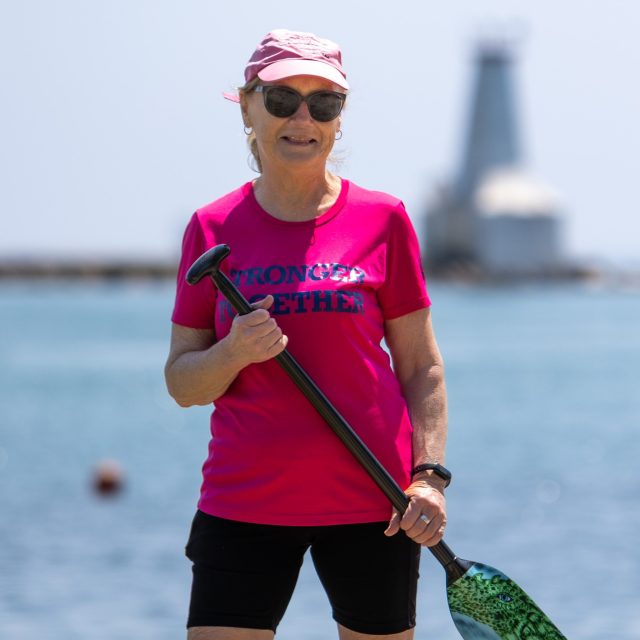
For Sandy Ward, who paddles with the Survivor Thrivers – a local dragon boat team made up of those living with a breast cancer diagnosis – it also serves as a ‘floating support group.’
Sandy was born and has lived most of her life in Port Hope. She was a registered nurse and worked the majority of her career at Northumberland Hills Hospital (NHH), until her retirement 10 years ago. Her friends would describe her as someone who doesn’t sweat the small stuff, who is helpful, funny, and empathetic, and someone who has appreciation for the life she is living.
From Sandy’s perspective, much of that attitude can be credited as a silver lining to having gone through breast cancer. As a survivor, she changed through the experience – became more outgoing, left her shell behind, and emerged stronger.
Sandy’s journey with breast cancer started when she discovered a lump two years before she was diagnosed. Her initial scans at a small clinic were misdiagnosed, and when the lump continued to grow, her doctor sent her for a mammogram at the former Cobourg District General Hospital. She was diagnosed with breast cancer in November 2002 and her care was coordinated at Cobourg, then subsequently NHH, with her surgery taking place within three weeks of her diagnosis, followed by six months of chemotherapy. At the time, Kingston was the closest place to see an oncologist, and she travelled back and forth for these specialist appointments as well as 16 treatments of radiation after her chemotherapy was complete. Her follow-up care and scans, of which there have been many, have been at NHH.
In the early days of her diagnosis, Sandy shares there were a lot of tears, remembering, “I didn’t think I was going to survive to see my daughters graduate high school. Now I’ve seen so much, including university graduations, marriages, and them becoming mothers themselves. I’m lucky to have five grandkids who I now get to watch grow up as well.”
Sandy went through much of her journey on her own and was determined to keep things as normal as possible for her girls, who were just 14 and 12 at the time of her diagnosis. This solo approach is not something she would recommend to others and is part of why she co-founded the Northumberland Breast Cancer Support Group in 2007, which is facilitated by members of the Survivor Thrivers.
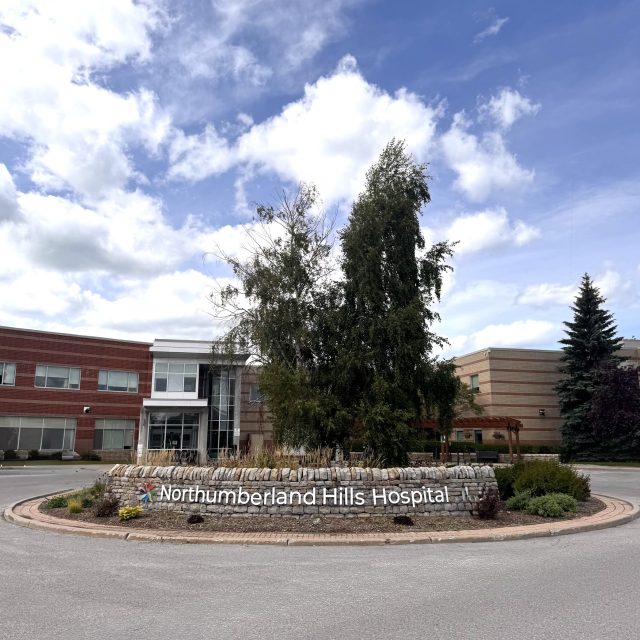
It fills her heart to know her experience can help others on their breast cancer journey, and she is pleased to see how much local healthcare and access has evolved since her treatment. She’s seen the growth of our hospital firsthand, as a patient, a staff member, and now as a volunteer with the NHH Auxiliary.
“The team at NHH goes above and beyond and that support can make such a difference during a care journey,” she shares. “Having state-of-the-art equipment so close to home is amazing and is a worthwhile investment for anyone who is able to donate. Health is wealth.”
The care Sandy received at NHH didn’t end when her treatment did. It gave her a foundation to heal, to grow, and to embrace a future she once wasn’t sure she would have. Today, every time her paddle hits the water, it is a reminder that she is part of a community filled with purpose, friendship, and strength.
Community Lives Here. Your Support Helps Ensure It Stays Here.
A strong hospital is the cornerstone of a strong community, but it does not stand alone. Funding for medical equipment and technology at hospitals in Ontario relies on fundraising.
The community’s impact can be seen, felt, and heard inside Northumberland Hills Hospital in the donor-funded medical equipment and technology that is essential to delivering modern healthcare. Community donations work alongside care teams to help provide patients — people like Heather — with what they need, not if, but when they need it.