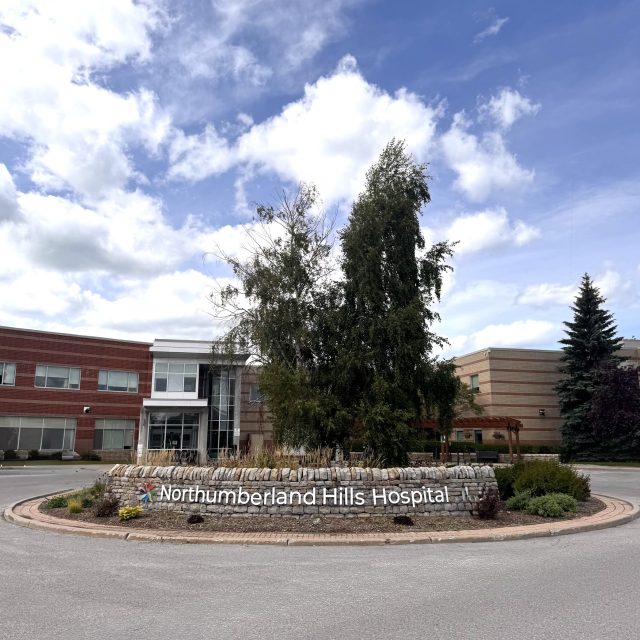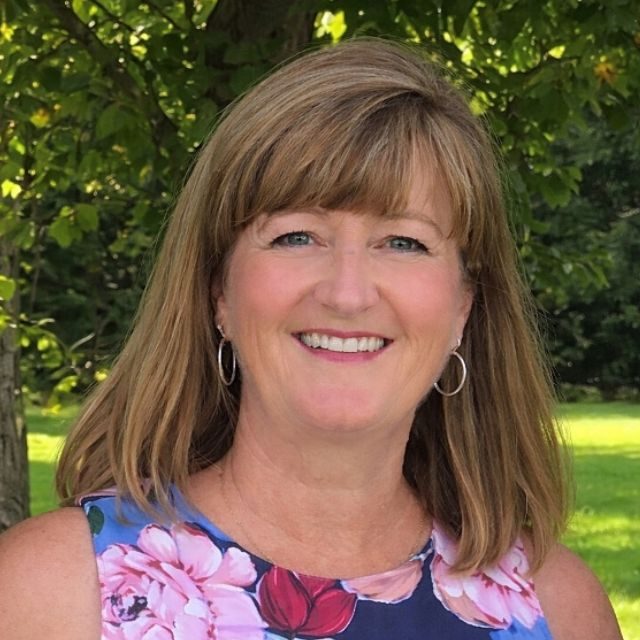

“It’s surreal to visit Northumberland Hills Hospital (NHH) without needing care,” shared Barbie Craig as she sat down in the Foundation office to tell her story.
Barbie’s journey has not been easy; it has been a nine-year fight, throughout which she has been cared for in many of the departments throughout the hospital. Though she is not 100% out of the woods, today she is on the right track and credits the NHH team for saving her and getting her through some of her darkest days.
Always open to trying new things, Barbie’s past featured adventure and passion. She has gone deep sea diving, ridden motorcycles, and was a professional model then body builder. She is a former ‘SUNshine Girl,’ who went on to run an animal shelter, and own a tanning salon.
When her long-term relationship ended, Barbie lost her home and business. She started drinking heavily and for years, alcohol took a heavy toll on her health. Barbie was hospitalized multiple times, experiencing many seizures that resulted in ambulance trips to the hospital, and eventually developing severe liver damage. Following one of the worst medical crises she experienced, she ended up intubated and in a coma in the Intensive Care Unit (ICU). She became jaundiced and needed blood transfusions to treat serious complications. She developed a painful fluid buildup in her abdomen that had to be regularly drained by a needle known as paracentesis, and at one point resulted in an umbilical hernia that impacted her ability to walk.
“I was a former body builder, and I could no longer walk,” Barbie remembers. “That really hit me. I had to fight for myself. Without the team at the hospital fighting for me, and me fighting for myself, I’d be gone.”
As of July, Barbie has been sober for five years. Though she was temporarily on the liver transplant list, with ongoing treatment and her commitment to recovery, her liver function has improved enough that she has now been removed. She is eternally grateful to the many members of the NHH team she has encountered throughout her journey, including those in the Emergency Department, Ambulatory Care, Diagnostic Imaging, Community Mental Health Services, the Intensive Care and Medical/Surgical Units.
“Everyone here gives so much,” she shares. “They talk to you as a person, not just another patient. My story shows how important our hospital is. They’ve helped me in incredible ways and I know they’ve helped so many others.”